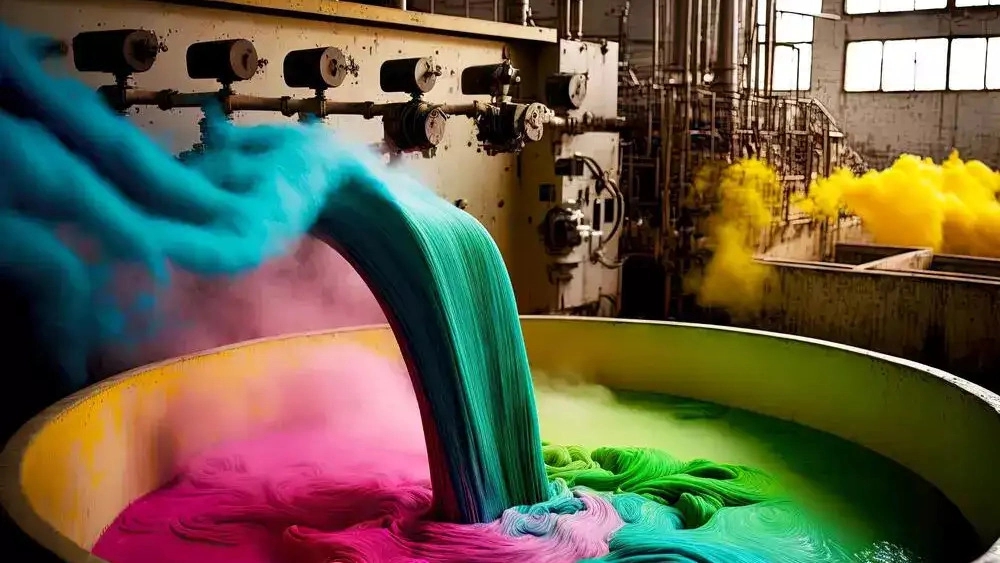
Since the past, the color and dyeing of these products has been the feature that distinguished Iran's carpet and textile industry from other countries. For example, one of the English specialists who traveled to Iran in the 16th century to learn the principles of dyeing, in his travelogue, mentions the state of dyeing in Iran as follows: In Iran, you will find carpets made of thick wool that have a constant color and are unparalleled in the world. does not have You should go to the big and small cities of Iran and learn how to dye wool because these colors are so stable that rain, wine and even vinegar cannot stain them. Of course, before the introduction of artificial dyes, all the dyeing needs of the country were met through natural dyes.
Herbal dyes
Plant dyes are cultivated in different regions of the country. Of course, it is not necessary to use the same type of plant to prepare a specific color everywhere in the country, but based on the weather conditions and the type of plants that grow in each region, these dyes are also different. For example, in the Khorasan region, a plant called spark is used to prepare yellow color, while in the west of the country and in provinces such as Kermanshah and Kurdistan, the kondol plant is used for this purpose.
Of course, in addition to geographical conditions. Other factors also play a role in determining the dye. One of the most important factors is the cost of dyeing. For example, saffron is used to make yellow color for special and expensive silks, while using saffron as a natural dye for ordinary fabrics is not economical.
The benefits of natural dyes
Natural dyes are more compatible due to the fact that they exist in nature and humans interact with it in different ways. In addition, other advantages for natural dyes can be listed, among these advantages, the following can be mentioned:
high resistance to oxidants and other chemicals
not causing respiratory and skin sensitivities
toxic Absence and compatibility with the environment
stability against strong light radiation and washing
the color and transparency of the fabric over time
artificial fiber dyeing in Tehran
Rose or Rashtan means to paint, and dyerzi is the infinitive of Rashtan and means to paint. In the past, humans used plants for self-decoration, but with the emergence of the textile industry and textile goods, including synthetic fibers, plants and natural materials were used to dye these goods.
Synthetic fibers are a group of fibers that are produced by a special method. This type of fiber is not normally found in nature but may have natural or synthetic origin. Synthetic fibers are divided into two categories, recycled synthetic fibers and synthetic synthetic fibers based on the raw material.
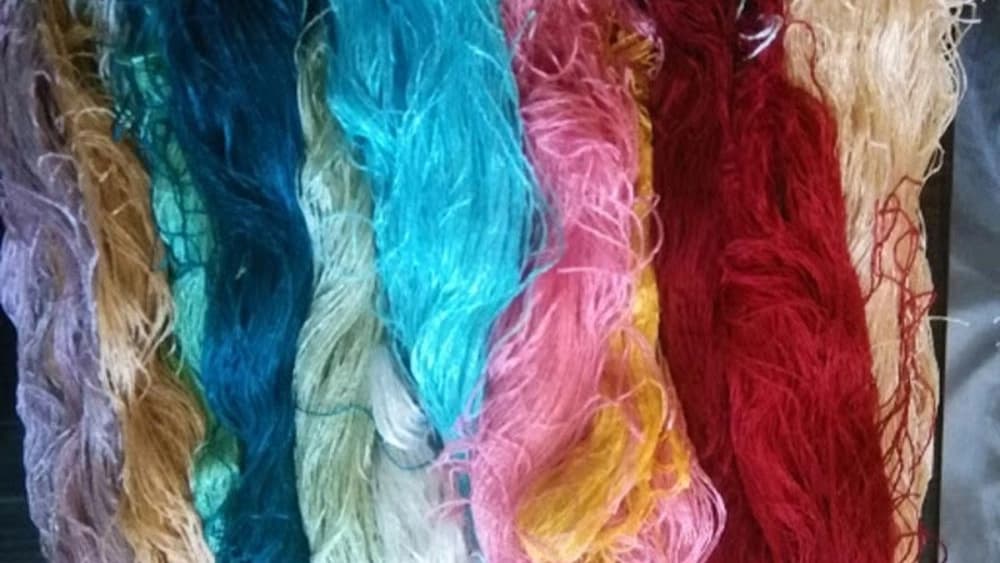
artificial dyes:
Synthetic dyes are classified based on their chemical structure and properties. In dyeing with synthetic dyes, the chemical structure of the fibers determines the type of color needed and the appropriate dyeing technique.
In dyeing, the chemical structure of the fibers always determines the type of color needed and the dyeing technique. For example, natural-animal fibers such as silk and wool are composed of protein and have acidic and basic groups. These groups are the points where the dye molecule attaches itself to the fibers, so for dyeing such fibers, dyes that have an acidic and basic base should be used.
Cotton is a carbohydrate and only has bonds It is neutral with ether and hydroxyl groups. At these points, hydrogen bonds are established between fibers and color. So, you should use colors that match the characteristics of cotton fibers. Connecting color to artificial and synthetic fibers such as polyolefins and hydrocarbons, which are completely free of polar groups, requires another technique and method. Alizarin or Ronas ink with the scientific name of 1, 2-dihydroxyanthraquinone is a red colored substance. which is used for dyeing in ronasi color. In 1869, Ronas ink was the first natural pigment that was imitated synthetically.
direct colors or inkal colors
This group of colors has groups and polar agents such as acidic and basic agents, and by using these groups, the color is combined with fibers. To dye the fabric with these colors, it is only necessary to dip the fabric in a hot blue dye solution. Picric acid and maritos yellow are among these colors. Both dyes are acidic and combine with the amino groups of protein fibers. Nylon, which is a polyamide, can be dyed with these dyes. The reason why these dyes were named direct is that this color category was the first category that had the ability to dye cotton fibers directly. Dyeing with this dye requires high precision because direct dye is It does not have good uniformity during dyeing. These dyes contain groups and polar agents such as acidic and basic agents, and by using these groups, the color is combined with fibers. The most important of this series of colors are:
direct tetra azo colors
direct diazo colors
direct tris azo colors such as brown Diazo
direct monoazo dyes such as diazoamine scarlet B
the nature of the binding of dye molecules to fibers is generally hydrogen bonding between the hydrogen of the OH group of fibers Cellulose is established with NH2O — OH and NH = NH groups on direct dyes. As the temperature increases, the tendency of the fibers to accept color decreases. In dyeing with direct dyes, as the dyeing time progresses, the color of the goods will become more uniform, but the time should not be so long that the direct dye decomposes. Also, with the increase of L:R, the drawing speed decreases, which also contributes to better uniformity.
Khami dyes
Khami dyes are very important despite having many problems in oxidation and reduction stages due to having excellent stability properties. Due to the lack of solubility of insoluble dyes and also the very low tendency of dyes to cellulosic products in this case, the process of reduction with reducing agents to convert the insoluble state to the soluble state and then the process of converting the soluble state to the loco state by alkali is necessary, which in total The mentioned processes are called regeneration. Due to the high regeneration potential of these dyes, the regeneration process is completely and satisfactorily by strong regenerators such as sodium hydrosulfite and A strong alkali such as sodium hydroxide is possible.
The reduction operation is performed in such a way that the carbonyl group is reduced and the double bond between carbon and oxygen is broken and a phenolic group is created instead, in a strong alkaline environment such as sodium hydroxide. The phenolic group is converted to sodium salt. The reduction reaction of Khami dye is shown in the figure.